Have you ever looked at an image and felt like it was hiding a secret message?
That’s exactly what makes picture riddles so fascinating.
Unlike traditional riddles that rely on words, picture riddles challenge your brain through images, symbols, patterns, and visual clues.
In 2026, picture riddles have become one of the most shared forms of content across social media platforms, classrooms, puzzle websites, and family game nights.
People love them because they combine observation skills, creativity, logic, and problem-solving into a single challenge.
If you’re searching for picture riddles with answers, visual brain teasers, rebus puzzles, image puzzles for kids, or challenging picture puzzles for adults, this complete guide will help you discover everything you need to know.
Get ready to test your eyes and your brain because these visual puzzles aren’t always as easy as they seem.
What Are Picture Riddles?
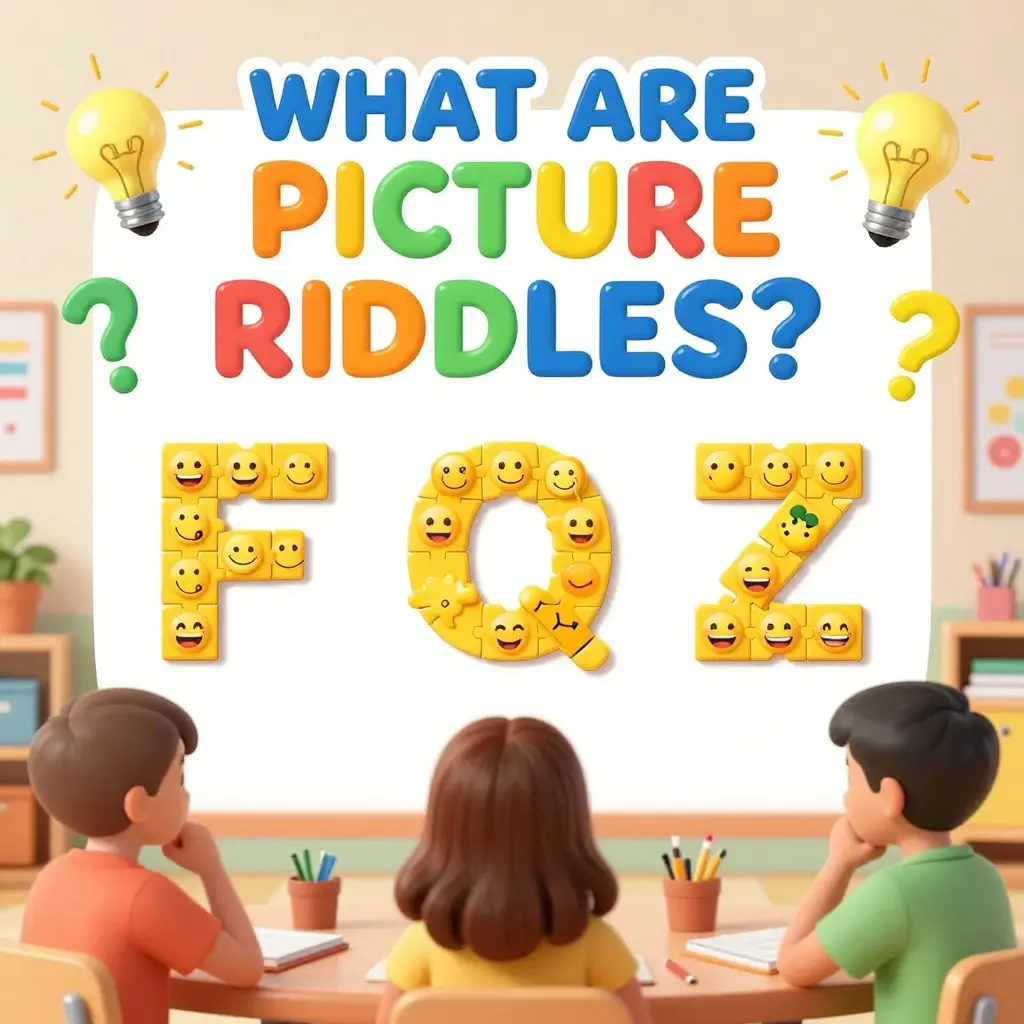
Picture riddles are puzzles that use images, symbols, illustrations, shapes, or visual arrangements to represent a word, phrase, object, or idea.
🖼️ Picture riddles rely on visual clues instead of written hints. 🖼️
🧠 They challenge observation and reasoning skills. 🧠
🔍 They encourage creative interpretation. 🔍
✨ They are suitable for children and adults alike. ✨
🎯 They provide a fun way to exercise the brain. 🎯
Unlike traditional riddles, the answer is often hidden in what you see rather than what you read.
Why Picture Riddles Are So Popular in 2026
Visual content dominates the internet, making picture riddles more popular than ever.
📱 Picture puzzles perform exceptionally well on social media. 📱
🚀 They generate high engagement and sharing rates. 🚀
🎉 Families use them during game nights. 🎉
🏫 Teachers use them to improve observation skills. 🏫
🌍 They can be enjoyed regardless of language barriers. 🌍
Because images are processed quickly by the brain, picture riddles feel both entertaining and rewarding.
Why Picture Riddles Improve Brain Function
Visual puzzles engage different cognitive skills than traditional text-based riddles.
🔬 They strengthen visual processing abilities. 🔬
🧩 They improve pattern recognition. 🧩
⚡ They enhance attention to detail. ⚡
💡 They encourage creative thinking. 💡
📈 They support memory development. 📈
Cognitive Benefits of Picture Riddles
| Skill | Benefit |
| Observation | Better attention to detail |
| Logic | Improved reasoning |
| Memory | Enhanced recall |
| Creativity | Stronger problem-solving |
| Focus | Increased concentration |
Different Types of Picture Riddles
Picture riddles come in many forms, each offering a unique challenge.
Rebus Puzzles
Rebus puzzles use pictures, letters, and symbols to represent words or phrases.
Spot-the-Difference Puzzles
These require identifying differences between two similar images.
Hidden Object Riddles
Players must locate hidden items within a larger image.
Optical Illusions
These challenge the brain’s interpretation of visual information.
Visual Logic Puzzles
These require reasoning based on images rather than text.
🎨 Each type develops different cognitive skills. 🎨
How to Solve Picture Riddles
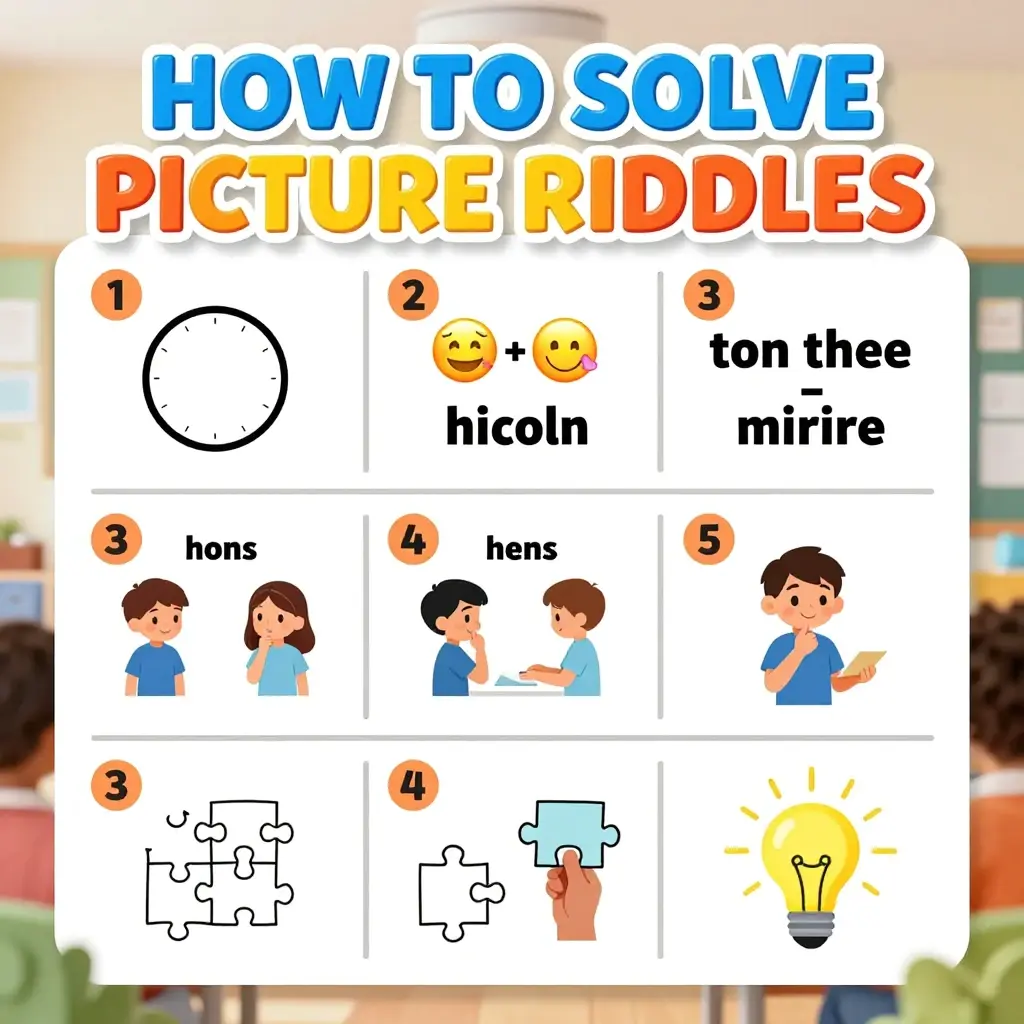
Many people rush through visual puzzles and miss important clues.
🔍 Study the image carefully. 🔍
🧠 Look for unusual details. 🧠
🎯 Consider multiple interpretations. 🎯
✨ Focus on patterns and arrangements. ✨
🚀 Avoid making assumptions too quickly. 🚀
Often the smallest visual clue contains the answer.
Top Picture Riddles With Answers
These classic picture riddles are among the most popular visual puzzles online.
Rebus Puzzle Examples
👁️ + ❤️ + U
Answer: I Love You. 👁️
🐝 + 🍃
Answer: Believe. 🐝
4 + 🧠
Answer: Forebrain. 4️⃣
⌚ + 🐶
Answer: Watchdog. ⌚
🌧️ + 🏹
Answer: Rainbow. 🌧️
Visual Word Puzzles
📚📚📚📚📚
Answer: Book collection. 📚
⬇️ MAN
Answer: Man down. ⬇️
🧍 Stand up.
🧍 Stay still.
🧍 Don’t move.
Answer: Three stands. STAND
👣 FOOT
Answer: Footsteps. 👣
🔙 Go back.
🔙 Come back.
🔙 Step back.
Answer: Back to back. 🔙
Easy Picture Riddles for Kids
Children naturally enjoy visual puzzles because they combine learning with fun.
🐱 + 🐟
Answer: Catfish. 🐱
🌞 + FLOWER
Answer: Sunflower. 🌞
🦋 + FLY
Answer: Butterfly. 🦋
🐝 + HIVE
Answer: Beehive. 🐝
🍎 + PIE
Answer: Apple pie. 🍎
These picture riddles help children improve vocabulary and observation skills.
Picture Riddles for Adults
Adult visual puzzles often involve more complex logic and symbolism.
🕵️ A picture shows a calendar with only Fridays marked. What does it suggest?
Answer: Someone is counting down to weekends. 🕵️
🏠 A house image appears upside down. What might it mean?
Answer: House turned around or upside down situation. 🏠
🎭 An image shows two masks facing opposite directions.
Answer: Mixed emotions or two-faced. 🎭
🔑 A giant key beside a small lock.
Answer: The key to success. 🔑
🌍 A globe with a clock.
Answer: Time around the world. 🌍
Funny Picture Riddles
Humor makes visual puzzles even more entertaining.
😂 A picture of bread wearing a crown.
Answer: The king of toast. 😂
🤣 A fish sitting in a classroom.
Answer: School of fish. 🤣
😆 A chicken crossing a road sign.
Answer: Why did the chicken cross the road? 😆
😁 A sleeping computer.
Answer: Computer nap. 😁
😄 A banana wearing sunglasses.
Answer: Cool banana. 😄
Hard Picture Riddles
These visual brain teasers require advanced observation skills.
🧩 A square hidden among hundreds of circles.
Answer: Find the unique shape. 🧩
🔍 A hidden number inside a complex pattern.
Answer: Focus on color differences. 🔍
🎯 A word concealed within an image.
Answer: Look for negative space. 🎯
⚡ A hidden animal in a landscape.
Answer: Observe outlines carefully. ⚡
🌟 A face disguised within an object.
Answer: Examine shadows and shapes. 🌟
Rebus Picture Riddles Explained
Rebus puzzles remain one of the most searched picture riddle formats online.
📖 They combine text and images. 📖
🎨 They require creative interpretation. 🎨
🧠 They strengthen visual reasoning skills. 🧠
✨ They are suitable for all age groups. ✨
🚀 They are easy to share on social media. 🚀
A rebus puzzle often appears simple but requires lateral thinking.
Why Picture Riddles Are Great for Social Media
Visual puzzles naturally attract attention.
📱 They increase user engagement. 📱
🚀 They encourage comments and shares. 🚀
🎯 They keep viewers engaged longer. 🎯
🏆 They create friendly competition. 🏆
🌟 They perform well across all platforms. 🌟
Many viral puzzle accounts rely heavily on picture riddles because people enjoy solving visual challenges together.
Shareable Picture Riddle Captions
💭 Can you solve this picture puzzle in under 10 seconds? 💭
🧠 Only sharp eyes can spot the answer. 🧠
🔥 This visual riddle is driving people crazy online. 🔥
🎯 Find the hidden clue before your friends do. 🎯
✨ Comment your answer before scrolling down. ✨
Common Mistakes When Solving Picture Riddles
Many people miss obvious clues because they rush.
⚠️ Ignoring small details. ⚠️
🚫 Looking only at the center of the image. 🚫
🔄 Overthinking simple clues. 🔄
🧩 Assuming every image is literal. 🧩
🎭 Missing hidden patterns. 🎭
Patience often leads to success.
How to Create Your Own Picture Riddles
Creating visual puzzles can be just as fun as solving them.
🎨 Start with a simple phrase. 🎨
🖼️ Replace words with images. 🖼️
✨ Use symbols creatively. ✨
🧠 Keep clues logical but challenging. 🧠
🚀 Test the puzzle on friends first. 🚀
The best picture riddles balance challenge with clarity.
FAQs:
1: What are picture riddles?
A: Picture riddles are visual puzzles that use images, symbols, patterns, or illustrations to represent words, phrases, or concepts.
2: Why are picture riddles popular?
A: They combine entertainment with mental challenges while being easy to share and enjoy across all age groups.
3: Are picture riddles good for kids?
A: Yes. They help improve observation skills, vocabulary, memory, and creative thinking.
4: What is a rebus picture puzzle?
A: A rebus puzzle uses pictures, letters, and symbols to represent words or phrases that players must decode.
5: Do picture riddles improve brain function?
A: Yes. They strengthen visual processing, reasoning, attention to detail, and problem-solving abilities.
6: Are picture riddles suitable for adults?
A: Absolutely. Many visual puzzles are designed specifically for advanced thinkers and puzzle enthusiasts.
7: Why are visual riddles harder than text riddles?
A: Visual riddles often require observation and interpretation skills in addition to logic.
8: Can picture riddles improve concentration?
A: Yes. They encourage careful observation and sustained focus.
9: How can I solve picture riddles faster?
A: Practice regularly, pay attention to details, and avoid making assumptions.
10: Why do picture riddles go viral?
A: People enjoy testing their observation skills and sharing challenges with friends and followers.
Conclusion:
Picture riddles are one of the most enjoyable and effective ways to challenge the brain.
By combining visual clues with logic and creativity, these puzzles offer a unique mental workout that appeals to both children and adults.
If you’re solving rebus puzzles, hidden object challenges, optical illusions, or visual brain teasers, picture riddles encourage observation, critical thinking, and problem-solving skills.
Their popularity continues to grow because they provide entertainment while sharpening the mind.
If you’re looking for a fun way to test your intelligence and improve your visual reasoning skills, picture riddles are an excellent place to start.

Christopher Nolan is a storytelling-focused riddle writer who blends mystery narratives with brain teasers. His content often includes hidden clues, suspenseful scenarios, and detective-style puzzles that keep readers fully engaged.